
Manufacturers are under increasing pressure to develop products faster, reduce costs, improve quality, and respond to changing market conditions with greater confidence. Traditional development methods that rely heavily on physical prototypes, trial-and-error testing, and reactive maintenance can slow projects down and increase risk.
That is why more manufacturers are paying attention to AI-powered digital twins. By combining simulation, engineering data, operational information, and artificial intelligence, digital twins are helping organizations make better decisions before problems become expensive.
For product development teams, engineering leaders, plant managers, and operations executives, this technology is becoming more than a future concept. It is becoming a practical tool for improving design validation, manufacturing performance, equipment reliability, and long-term competitiveness.
What Is a Digital Twin?
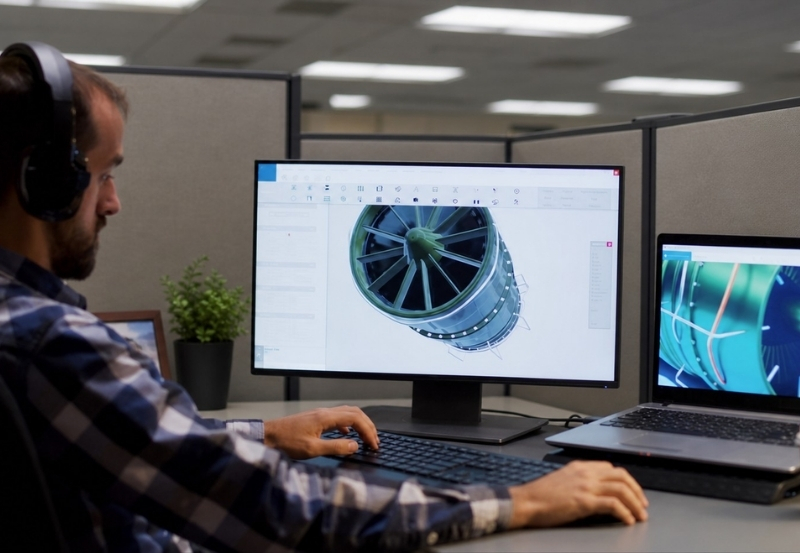
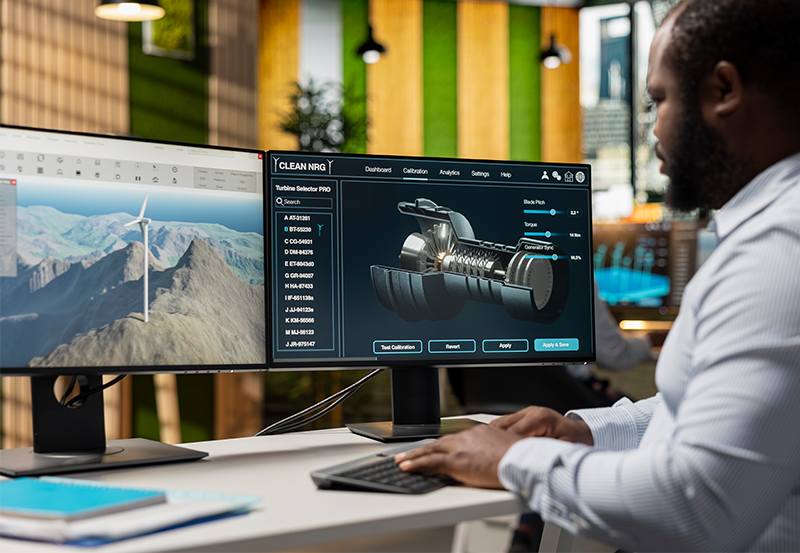
A digital twin is a virtual representation of a physical product, process, system, or manufacturing operation. Unlike a basic 3D CAD model, a digital twin can incorporate engineering assumptions, performance data, operating conditions, and real-world feedback.
Digital twins can be used to model and evaluate:
- Product designs
- Manufacturing equipment
- Production lines
- Material handling systems
- Assembly processes
- Tooling, fixtures, and workstations
- Facilities and operational workflows
When artificial intelligence is added, the digital twin becomes more than a static model. It can help identify patterns, predict outcomes, evaluate alternatives, and support faster decision-making.
How AI Makes Digital Twins More Valuable
Traditional simulation helps engineers understand how a product or system may behave under specific conditions. AI adds another layer by helping teams analyze larger amounts of data, recognize trends, and forecast future performance.
AI-powered digital twins can support manufacturers by helping them:
- Predict component failures before they occur
- Identify production bottlenecks
- Optimize equipment settings
- Evaluate design alternatives faster
- Improve maintenance planning
- Reduce energy usage and material waste
- Increase visibility across manufacturing processes
Instead of waiting for performance issues to appear during testing, production, or field use, engineering and operations teams can use digital twins to make more informed decisions earlier in the process.
Accelerating Product Development Through Simulation
One of the strongest applications for AI-powered digital twins is product development. In many organizations, new products still move through multiple rounds of prototyping, testing, redesign, and validation before they are ready for production.
Physical testing will always play an important role, especially for safety-critical and performance-sensitive applications. However, simulation-driven engineering can reduce the number of costly prototype iterations required to reach a validated design.
For example, engineers can use simulation to evaluate:
- Structural integrity
- Stress and strain
- Thermal behavior
- Fatigue life
- Load capacity
- Material usage
- Potential failure modes
This is where ENSER's Finite Element Analysis Services provide a strong foundation for simulation-driven product development. FEA helps manufacturers validate designs, reduce costs, improve reliability, and identify risks before a product is built.
ENSER also highlights practical applications of simulation in its Finite Element Analysis project overview, where design validation, safety, stiffness, and performance are evaluated early in the engineering process.
Reducing Engineering Rework and Late-Stage Design Changes
Late-stage engineering changes are among the most expensive problems in product development. When design issues are discovered after tooling, fabrication, or production planning has begun, the impact can quickly spread across cost, schedule, and customer commitments.
Common outcomes include:
- Additional prototype costs
- Material waste
- Tooling modifications
- Production delays
- Supplier disruption
- Warranty or field performance concerns
AI-powered digital twins help reduce this risk by allowing engineering teams to test more scenarios virtually. Instead of validating only a limited number of physical conditions, teams can evaluate many load cases, material options, usage patterns, and environmental assumptions before committing to production.
The result is a more confident development process with fewer surprises, better documentation, and stronger alignment between engineering intent and manufacturing reality.
Improving Manufacturing Performance
Digital twins are not limited to product design. They can also be used to improve manufacturing operations by modeling processes, equipment, workflows, and production constraints.
Production Line Optimization
Manufacturers can use digital twins to evaluate layout changes, equipment placement, cycle times, and workflow improvements before making physical changes on the floor. This helps reduce disruption while supporting better throughput and efficiency.
Predictive Maintenance
AI-powered digital twins can analyze equipment behavior and identify early warning signs of wear, misalignment, or performance degradation. This allows maintenance teams to act before downtime occurs.
Quality Improvement
By connecting process data with product performance, manufacturers can better understand how variation in equipment settings, materials, or operating conditions may affect quality.
Resource Utilization
Digital twins can help identify where labor, materials, equipment, or floor space are being underused or overextended. These insights support better planning and continuous improvement.
The Role of Material Handling in Digital Twin Strategy
Material handling is often overlooked in digital transformation conversations, but it plays a major role in productivity, safety, ergonomics, and production flow.
Manufacturers regularly need to move heavy, awkward, fragile, or high-value components between workstations, machines, inspection areas, and assembly operations. Poor handling processes can increase injury risk, slow production, damage parts, and create bottlenecks.
Digital twins can help teams evaluate material movement before making changes to workstations or equipment. This can include:
- Lift paths
- Operator reach and ergonomics
- Workstation layout
- Fixture positioning
- Assembly sequence
- Floor space constraints
- Interaction between lifting devices and production equipment
For facilities that need safer and more flexible lifting solutions, LiftTrac Custom Industrial Lifting Solutions can help bridge the gap between engineering analysis and practical implementation. LiftTrac systems are designed to help teams handle heavy or awkward materials safely and efficiently without the bulk or cost of a forklift.
Organizations can also review available configurations on the LiftTrac products page, including lifter transporters designed for assembly, maintenance, production, and material movement applications.
Why Manufacturers Are Investing in Digital Twins Now
Several forces are making AI-powered digital twins more important for manufacturers in 2026.
Cost Pressure
Manufacturers are looking for ways to reduce development expense, minimize waste, and avoid preventable production problems. Digital twins support earlier decision-making and can reduce the cost of engineering changes.
Workforce Challenges
Skilled labor shortages continue to affect engineering, maintenance, production, and automation roles. Digital tools can help teams do more with limited resources by improving visibility, standardizing knowledge, and supporting faster troubleshooting.
Supply Chain Uncertainty
When sourcing, lead times, and material availability are unpredictable, manufacturers need flexible designs and resilient processes. Simulation can help teams evaluate alternatives before supply chain issues become production issues.
Faster Time-to-Market
Product teams are under pressure to move quickly while still meeting performance, safety, and quality requirements. AI-powered digital twins help reduce uncertainty during the development cycle.
Greater Demand for Data-Driven Decisions
Leadership teams increasingly expect engineering and operations decisions to be supported by data. Digital twins provide a structured way to connect design assumptions, simulation results, production information, and performance outcomes.
How to Start Using Digital Twin Thinking
Manufacturers do not need to digitize everything at once to benefit from digital twin thinking. A practical starting point is to focus on one high-value problem where better modeling, simulation, or process visibility could reduce risk.
Good starting points include:
- A product with repeated design changes
- A component with field performance concerns
- A production bottleneck
- A material handling challenge
- A lifting or ergonomic safety issue
- A fixture, tool, or workstation that limits throughput
- A process that depends heavily on operator experience
From there, engineering teams can determine what data, models, simulations, and validation methods are needed to make better decisions.
The Future of Engineering Is Simulation-Driven
AI-powered digital twins are changing how manufacturers think about product development, equipment reliability, production flow, and operational improvement. The value is not simply in creating a digital model. The value is in using that model to make better decisions, reduce risk, and improve performance.
As AI tools continue to mature, manufacturers will be able to simulate more scenarios, improve predictions, and connect engineering decisions more directly to business outcomes.
For companies developing new products, improving manufacturing systems, validating equipment, or addressing material handling challenges, digital twin technology offers a practical path toward faster development, safer operations, and more resilient production.
Bring Simulation-Driven Engineering to Your Next Project
Whether you are developing a new product, validating a critical component, optimizing a manufacturing process, or improving material handling, ENSER can help turn engineering insight into practical results.
Our team combines simulation, mechanical engineering, manufacturing knowledge, tooling experience, and real-world problem solving to support projects from concept through implementation.