Manufacturing Investment Does Not Guarantee Manufacturing Readiness
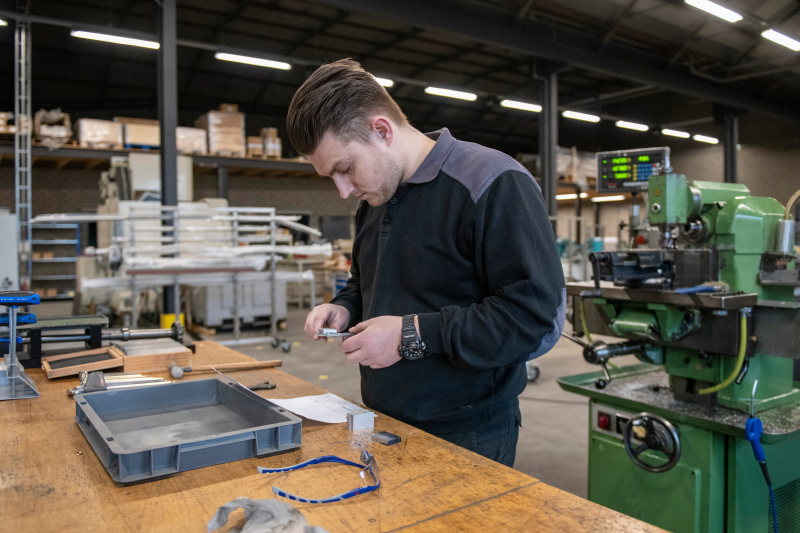
Manufacturers are investing in domestic capacity, new facilities, upgraded equipment, and expanded production. Those investments can create important opportunities, but a new building or machine does not automatically create a reliable manufacturing process.
Before production can become repeatable, the design, tooling, fixtures, material handling, testing, and work instructions all need to support the same outcome.
That is the practical meaning of manufacturing readiness. It is the point where an engineering concept or production plan has been reviewed well enough to move into the plant with a reasonable understanding of how it will be built, handled, tested, inspected, and maintained.
Why Manufacturing Readiness Matters Now
Recent U.S. manufacturing activity shows both opportunity and caution. Manufacturing output rose in September 2026, but third-quarter factory growth slowed and capacity utilization remained below its long-term average, according to Reuters reporting on the latest industrial production data.
At the same time, large domestic investments are being announced in industries such as semiconductors and medical devices. GlobalFoundries announced plans for a major New York expansion, while Becton Dickinson committed to significant domestic manufacturing investment. Those projects show the scale of the opportunity, but they also highlight the need to convert investment into equipment, qualified processes, capable suppliers, and consistent output.
For many manufacturers, the next advantage will not come from simply spending more on capacity. It will come from preparing that capacity to work as intended.
Manufacturing Readiness Starts With the Product
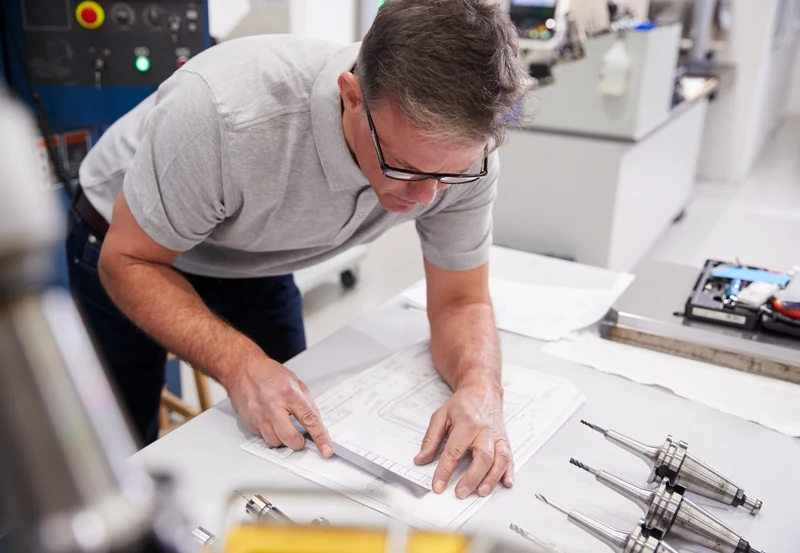
A production problem can begin with a design that was never reviewed closely enough for the intended manufacturing process.
A part may be structurally sound but difficult to machine. A welded assembly may meet its dimensional requirements in the drawing but be difficult to fixture or inspect. A lifting point may work in a model but create an awkward or unsafe handling step on the floor.
Manufacturing readiness requires the engineering team to ask practical questions early:
- Can the selected material be sourced consistently?
- Can the part be fabricated with the available equipment and skills?
- Are the tolerances necessary and measurable?
- Can the component be located and held repeatably?
- Can operators assemble, inspect, and service it safely?
- What changes when the design moves from prototype to production?
These questions are not a reason to slow a project down. They are a way to find problems while the design is still flexible.
Tooling and Fixtures Turn Design Intent Into Repeatable Work
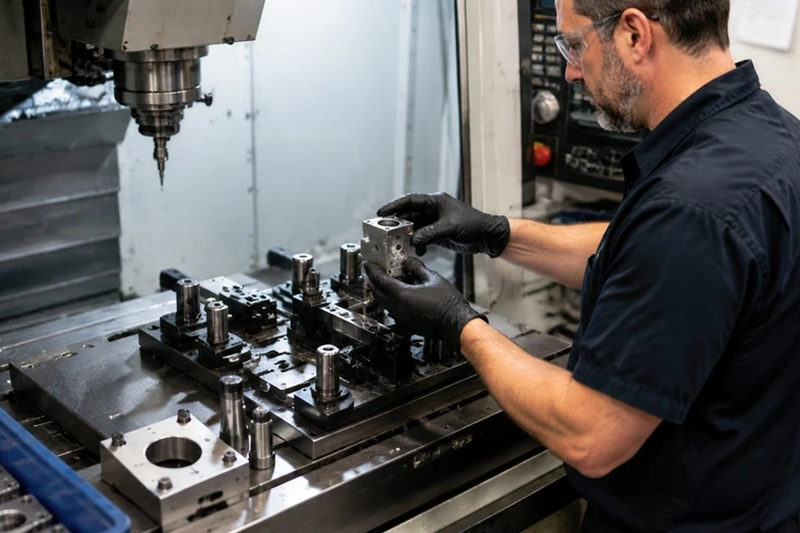
Tooling and fixtures are often where manufacturing readiness becomes visible. A fixture determines how a part is located, supported, clamped, rotated, inspected, or transferred from one step to the next.
When the fixture is poorly matched to the process, the results may include inconsistent dimensions, difficult setup, excessive operator effort, part damage, or additional inspection and rework.
A good fixture does more than hold a part in place. It helps the operator complete the work in the same way each time. It can provide access for welding or machining, support inspection, reduce awkward handling, and make the intended sequence easier to follow.
ENSER’s custom tooling and fixture engineering supports manufacturing applications where repeatability, access, handling, and production practicality all matter.
FEA Helps Test Decisions Before Fabrication
Finite element analysis can help manufacturers evaluate a design before committing to fabrication, tooling, or a production change. It can provide insight into stress, deflection, load paths, fatigue concerns, and areas that deserve additional review.
For manufacturing readiness, the most useful analysis is tied to the way the product will actually be built and used. That means considering supports, connections, welds, fasteners, contact surfaces, loading conditions, and expected variation in fabrication or assembly.
FEA is especially useful for fixtures, frames, lifting devices, test structures, and components that must carry repeated or safety-sensitive loads. It can help the team compare design options and identify potential concerns before a physical prototype is complete.
FEA is not a replacement for testing. It is one part of a stronger engineering process. ENSER’s FEA services connect simulation with design review, manufacturing considerations, and physical validation.
Testing Should Be Planned Before the Product Is Built
Testing is most valuable when it answers a specific engineering question. The team should know what it needs to confirm, how the test will be performed, what measurements matter, and what result will allow the project to move forward.
Depending on the application, testing may examine:
- Load capacity and structural response
- Deflection and alignment
- Repeated-use or fatigue behavior
- Fit and assembly performance
- Fixture repeatability
- Operator interaction and material handling
- Performance under actual production conditions
Testing can also reveal differences between the engineering model and the manufactured product. Material variation, welds, fasteners, tolerances, and assembly conditions all influence the final result.
That is why the most useful validation process connects FEA, physical testing, and manufacturing review instead of treating testing as a final inspection step.
Material Handling Is Part of Manufacturing Readiness
Production readiness includes more than the part and the machine. It also includes how people and equipment move the work.
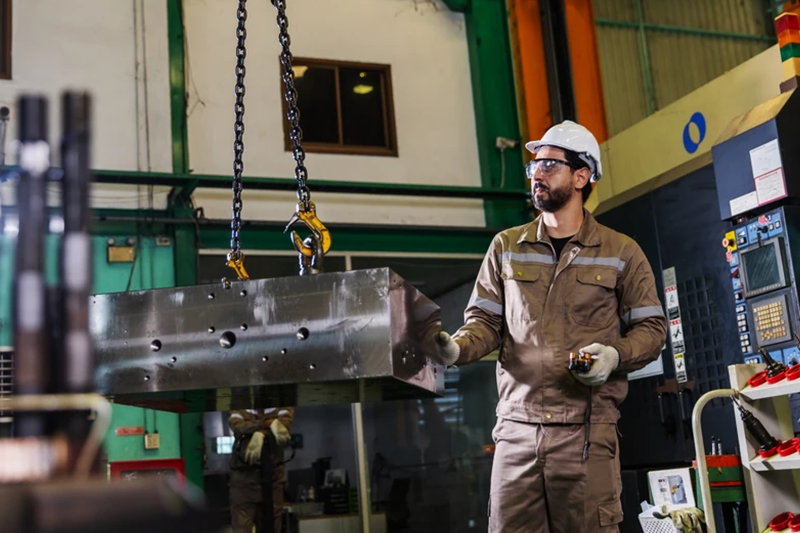
Large, awkward, or high-value components may need to be lifted, rotated, positioned, or transferred several times during fabrication and assembly. If those steps depend on excessive physical effort or improvised handling, the process may be difficult to staff and difficult to repeat.
A below-the-hook lifting device, lift assist, transporter, or custom handling fixture may be a practical way to make the process safer and more consistent. ENSER’s below-the-hook lifting services support engineered handling solutions for manufacturing, maintenance, and assembly applications.
Readiness Requires More Than One Department
Manufacturing readiness is rarely owned by one department. Engineering may own the design. Operations may own the process. Quality may define inspection. Maintenance may support equipment and tooling. Purchasing may manage suppliers and materials.
If those groups review the project separately, important connections can be missed. A design change may affect a fixture. A new material may change the FEA assumptions. A different welding process may affect distortion and inspection. A new handling method may require changes to the workstation or assembly sequence.
An engineering-to-manufacturing partner helps connect those decisions before they become production problems.
What a Practical Readiness Review Should Include
A useful readiness review does not need to be complicated. It should focus on the decisions that could affect cost, schedule, quality, safety, or repeatability.
- Review the design and intended use.
- Identify the actual loads, motions, materials, and operating conditions.
- Evaluate manufacturability and available processes.
- Define tooling, fixtures, lifting, and handling requirements.
- Use FEA where it can answer an important design question.
- Define physical testing and acceptance criteria.
- Confirm how the solution will be fabricated, inspected, installed, and maintained.
The result is not just a better drawing. It is a clearer path from engineering intent to reliable production.
How ENSER Supports Manufacturing Readiness
ENSER connects mechanical engineering, product development, FEA, tooling and fixture design, lifting and handling, testing, fabrication, and turnkey manufacturing support.
That combination is useful when a manufacturer is expanding capacity, transferring production, improving an existing process, developing a new product, or trying to resolve a problem that crosses the boundary between engineering and manufacturing.
The goal is straightforward: help manufacturers make better decisions before production, then support the practical work required to make those decisions succeed on the floor.
Frequently Asked Questions
What is manufacturing readiness?
Manufacturing readiness is the point where a product or production plan has been reviewed well enough to understand how it will be built, handled, tested, inspected, and maintained in the intended manufacturing environment.
Why are tooling and fixtures important to manufacturing readiness?
Tooling and fixtures affect how parts are located, supported, clamped, machined, assembled, inspected, and handled. A well-designed fixture can make work more repeatable and easier to perform consistently.
How does FEA support production planning?
FEA can help evaluate structural loads, deflection, stress, and design alternatives before fabrication. It is useful for components, fixtures, frames, lifting devices, and test structures that must perform reliably in production.
Does FEA replace physical testing?
No. FEA helps engineers explore and improve a design before fabrication, while physical testing helps confirm how the manufactured product performs under real conditions. Using both methods provides a stronger basis for production decisions.
When should a manufacturer begin a readiness review?
A readiness review should begin before production equipment, tooling, or fabrication plans are finalized. Early review makes it easier to identify design, manufacturability, handling, testing, and supplier-capability issues.