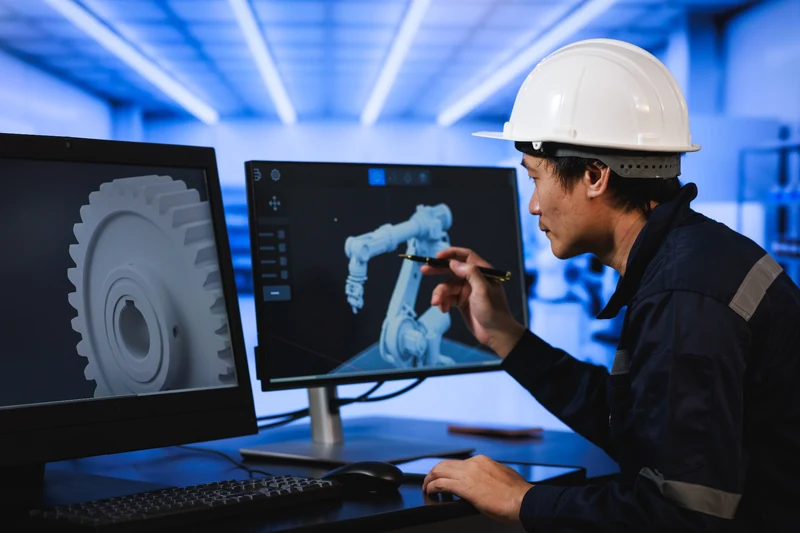
Modern engineering teams can move fast. Computer-aided design makes revisions easier. Simulation can expose problems before hardware exists. Digital collaboration lets engineers, customers, suppliers, and manufacturing teams review changes without waiting for drawings to move from desk to desk.
But moving from design to production is still where much of the real work happens. A redesigned component might look right on the screen and perform well in an analysis, yet still require tooling, fixtures, supplier coordination, physical testing, qualification, work instructions, manufacturing planning, and production validation before anyone should call it ready.
Faster product development is valuable only when the path to reliable production can keep up with it.
The Digital Design May Be Ready. Production May Not Be.
It has never been easier to make a design change. Changing geometry in a CAD model might take hours rather than days. Finite element analysis (FEA) can help engineers evaluate loads, stresses, deflection, or other design behavior before committing to hardware.
That speed can create a misleading sense of readiness. A digital design can be technically complete while the production system needed to build it is still catching up.
- Tooling may need to be designed, modified, or validated.
- Fixtures must locate and hold parts repeatably.
- Suppliers may need revised drawings, material, or process requirements.
- Critical components may require FEA, prototype testing, or physical validation.
- Inspection methods and acceptance criteria must be established.
- Operators need a safe, workable way to load, assemble, move, and inspect the product.
- Manufacturing processes must prove they can produce the same result repeatedly.
Product Development Speed Depends on the Whole System
The bottleneck is often not one engineering task. It is the handoff between several tasks. Product engineering can finish a revision while tooling is still being updated. A supplier may be waiting for a released drawing while manufacturing is waiting for the supplier. Testing may identify a change that sends work back to design, tooling, and purchasing.
The practical goal is not simply to make every individual step faster. It is to reduce the gaps between them.
Bring Manufacturing Constraints Into the Design Earlier
One of the best ways to shorten the design-to-production cycle is to involve manufacturing considerations before the design is treated as finished. Engineers should ask early how the part will be made, located, clamped, lifted, assembled, inspected, serviced, and moved through the plant.
Those questions can expose problems while changes are still relatively inexpensive. Waiting until tooling is built or production begins turns the same issues into rework, schedule pressure, and downtime.
Use Analysis to Reduce Expensive Iteration
FEA and other engineering analysis can help teams evaluate critical design decisions before physical testing. The objective is not to eliminate testing. It is to use analysis intelligently so physical testing is focused on the questions that genuinely need hardware.
When simulation, engineering judgment, and physical validation support each other, teams can identify weak points sooner and make better-informed design decisions before committing to production equipment or tooling.
Develop Tooling and Fixtures Alongside the Product
Tooling and fixtures should not be an afterthought. If a product requires a custom fixture, assembly aid, lifting device, inspection fixture, or machining setup, that equipment is part of the production system required to make the product successfully.
Starting that work earlier gives tooling engineers time to resolve access, clamping, tolerance, ergonomics, load, and repeatability issues while the product design is still flexible.

Treat Suppliers as Part of the Development Path
Supplier lead times and capabilities can determine whether a design is practical on the desired schedule. Material availability, special processes, machining capacity, inspection requirements, and purchased components all affect production readiness.
Earlier supplier involvement can uncover manufacturability or lead-time constraints before they become launch problems.
Validate the Process, Not Just the Product
A successful prototype proves that a product can work. Production readiness asks a harder question: can the company build it repeatedly, safely, and at the expected rate?
That requires validating more than product performance. Teams may also need to confirm workholding, assembly sequence, inspection methods, material flow, operator access, cycle expectations, documentation, and the ability to recover from normal variation.
Add Engineering Capacity Where the Handoffs Are Breaking Down
Companies do not always need a completely new product-development process. Sometimes they need additional engineering capacity at the points where work is stacking up.
ENSER supports product development, FEA, tooling and fixtures, testing, manufacturing engineering, material handling, and technical staffing. That breadth helps companies connect design decisions to the practical work required to manufacture, validate, and launch a product.
The value is not simply having more engineers. It is having the right engineering support available where the path from design to production is slowing down.
A Faster Design Is Only Useful If Production Can Follow
Digital engineering tools have changed how quickly teams can revise and evaluate products. But the final measure of development speed is not how quickly a CAD model changes. It is how efficiently the organization can turn a viable design into a stable, repeatable production process.
Companies that connect design, analysis, tooling, suppliers, testing, and manufacturing earlier can reduce disconnected handoffs and identify production problems before they become launch problems.
That is how faster product development becomes faster, more reliable production.
Frequently Asked Questions
What does design to production mean?
Design to production is the process of turning an engineered product design into a stable, repeatable manufacturing process, including validation, tooling, fixtures, suppliers, testing, documentation, and production readiness.
Why can product development move faster than manufacturing readiness?
Digital design and simulation can change quickly, while tooling, supplier lead times, physical testing, qualification, inspection methods, and manufacturing processes often require physical work and coordination that take longer.
How can FEA help accelerate product development?
FEA can help engineers evaluate stresses, loads, deflection, and other design behavior before hardware is built, allowing teams to focus physical testing and reduce avoidable design iterations.
When should tooling and fixtures be developed?
Tooling and fixture development should begin early enough to influence the product design. Early involvement helps resolve clamping, access, tolerance, ergonomics, lifting, inspection, and repeatability issues before production launch.
How can outside engineering support improve production readiness?
Outside engineering support can add capacity in areas such as product design, FEA, tooling, fixtures, testing, manufacturing engineering, material handling, and technical staffing when internal teams are overloaded or specialized expertise is needed.