

Simulation-Driven Engineering for Safer, Smarter Manufacturing
This article highlights how Finite Element Analysis (FEA) enhances the design and performance of tooling and fixtures by predicting how materials respond to real-world forces, temperatures, and stresses. It explains ENSER’s structured FEA workflow—from defining load cases and selecting material models to meshing, solving, and refining designs, and illustrates its impact through a real example where simulation prevented premature fatigue failure in a lift fixture. By integrating FEA early in product development, ENSER helps manufacturers improve structural integrity, reduce prototyping costs, extend equipment lifespan, and bring safer, more reliable tools into production with confidence.
Introduction
Finite Element Analysis (FEA) has revolutionized modern engineering design. For manufacturers developing complex tooling and fixtures, it provides a digital lens into how materials behave under real-world loads, temperature, and stress. ENSER integrates advanced FEA techniques into every stage of product development to deliver optimized, durable, and cost-effective solutions.
Understanding FEA in Manufacturing
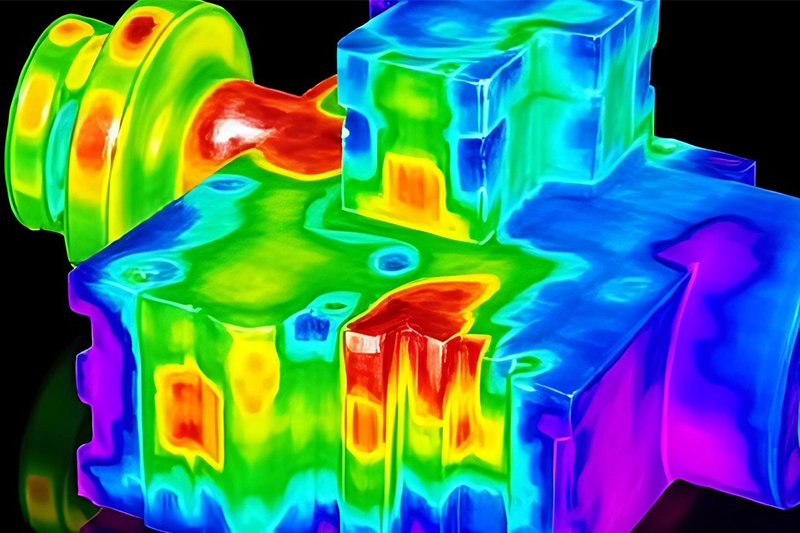
FEA divides a 3D model into small, interconnected elements that represent how the structure will deform, strain, or fail under applied conditions. This predictive insight helps engineers identify potential weaknesses long before fabrication begins. In tooling and fixture design, FEA ensures rigidity, minimizes deflection, and verifies safety margins-critical for maintaining production precision.ENSER’s Proven FEA Workflow
- Define Load Cases: Determine the real forces the tool or fixture will experience during operation.
- Material Characterization: Choose the correct material model-steel, aluminum, or composites-based on mechanical properties.
- Meshing and Boundary Conditions: Create a fine mesh and apply constraints that simulate how the part is held or mounted.
- Solve and Interpret: Run simulations to evaluate stresses, displacement, and targeted safety factors.
- Refine and Validate: Adjust geometry to improve performance before moving to fabrication.
Real-World Success
For a client in heavy-equipment assembly, ENSER applied iterative FEA to validate a lift fixture under eccentric loading. Simulation results revealed a potential stress concentration that could have caused early fatigue failure. By altering gusset placement and modifying weld configurations, ENSER improved fixture life expectancy by 60 percent-saving time, cost, and warranty risk.
Benefits of Using ENSER’s FEA Expertise
- Reduced prototyping time and material waste
- Improved structural integrity and product lifespan
- Enhanced safety compliance and performance assurance
- Data-driven design decisions backed by simulation
Conclusion
The process of finite element analysis isn’t just about software-it’s about engineering insight. ENSER combines analytical precision with manufacturing experience to deliver fixtures that perform flawlessly under pressure. By leveraging FEA early, manufacturers can eliminate guesswork and bring smarter, safer tools to production faster.
Frequently Asked Questions
Optimize Tooling Design with Advanced FEA Solutions
ENSER’s team specializes in applying Finite Element Analysis (FEA) to reduce failure risk and improve performance in tooling and fixtures. Get in touch to see how we can enhance your next project.