


Recent national reporting on manufacturing employment paints a challenging picture heading into 2026. Job declines tied to automation, artificial intelligence, and cost pressure are reshaping how manufacturers think about workforce planning.
At the same time, regional data in the Mid Atlantic tells a more nuanced story. While national manufacturing hiring remains uneven, local indicators suggest selective demand is returning for skilled manufacturing and engineering talent.
A Split Labor Market Is Taking Shape
National manufacturing employment has softened, particularly in high-volume and commodity-driven sectors. Automation and AI are accelerating changes in how work gets done, reducing the need for some traditional production roles while increasing efficiency across facilities.
Regionally, however, manufacturers across Pennsylvania, New Jersey, and Delaware are showing cautious optimism. January manufacturing data from the Philadelphia Fed points to improving conditions and early hiring intent in parts of the Mid Atlantic.
This split explains what many employers are already experiencing. Manufacturing hiring is not disappearing. It is becoming more targeted.
Where Manufacturing Hiring Is Still Strong
In the Mid Atlantic, manufacturers are hiring with precision. Headcount growth is limited, but demand remains steady for technical and specialized roles that support advanced production environments.
The most common needs include:
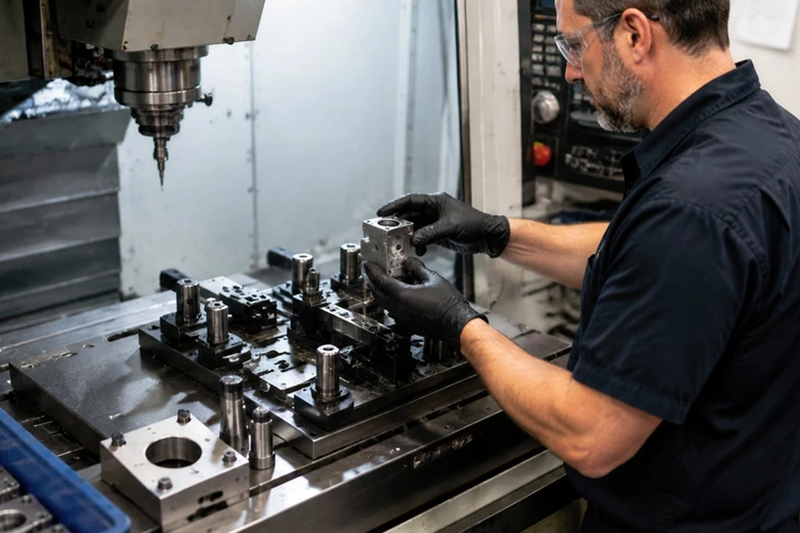
- Precision machinists and CNC operators supporting medical devices and specialty tooling
- Controls technicians and PLC programmers for automated manufacturing systems
- Assemblers and test technicians tied to defense, aerospace, and energy storage programs
These positions are less exposed to price volatility and more closely tied to regulated industries, long-term contracts, and capital investment.
Manufacturers focused on commodity production continue to take a more cautious approach, particularly where material costs, tariffs, and supply chain uncertainty remain factors.
How Automation and AI Are Changing Manufacturing Staffing
Automation and AI are already embedded in today’s manufacturing environments. Their impact is less about eliminating jobs and more about changing skill requirements.
Routine inspection, maintenance, and scheduling tasks are increasingly handled by automated systems. As a result, manufacturers are seeking workers who can oversee equipment, interpret data, and respond to exceptions rather than perform repetitive tasks.
This shift is driving demand for hybrid roles such as:
- Technicians who support automated inspection and quality systems
- Controls engineers integrating predictive maintenance into existing equipment
- Automation technicians who understand both machinery and production performance data
Manufacturing staffing in 2026 will continue to favor professionals who can operate at the intersection of hands-on experience and technical fluency.
What This Means for Employers and Job Seekers
For employers, successful hiring strategies will focus less on volume and more on alignment. Automation investments work best when paired with realistic workforce planning and access to specialized engineering and manufacturing talent.
For workers, adaptability matters. Manufacturing professionals who build skills in controls, automation, and system monitoring will remain in demand as facilities modernize.
The Bottom Line
The manufacturing labor market heading into 2026 is not uniform. National pressure is real, but regional opportunities still exist, particularly in the Mid Atlantic.
Manufacturers that rely on advanced processes, regulated production, and automation-driven efficiency continue to hire. The difference is that the jobs look different than they did in the past.
Manufacturing staffing today is about precision, specialization, and matching the right talent to how modern facilities actually operate.