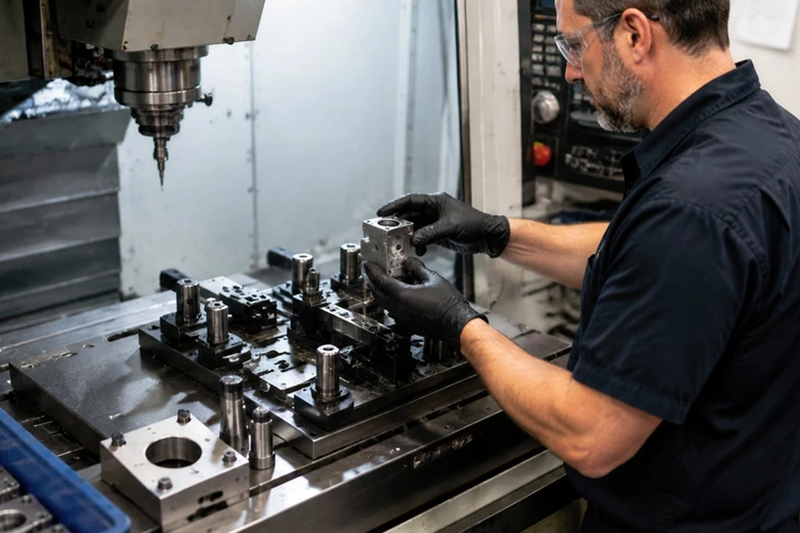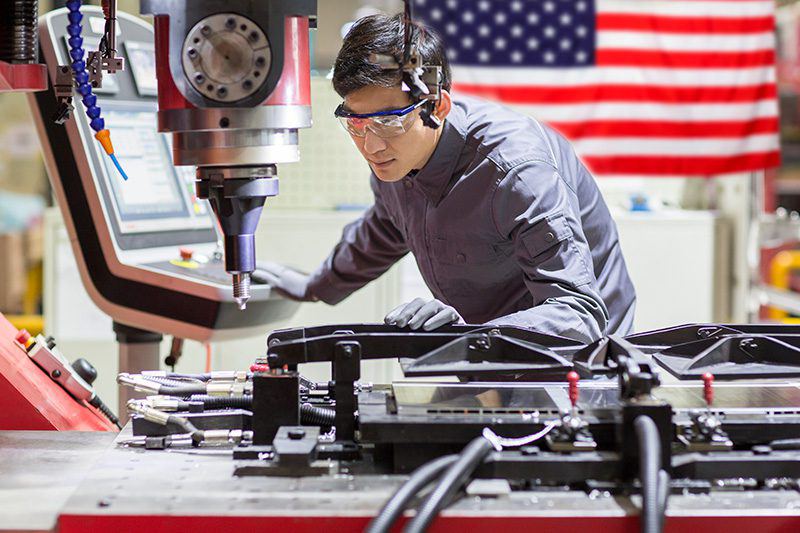
Automation is one of the biggest conversations in manufacturing today. Companies are exploring robotics, AI-enabled production, digital twins, smart factories, and more connected manufacturing systems. These technologies can create real advantages, but they all depend on one essential requirement: the process must be repeatable. A robot cannot consistently load a part that is difficult to locate. A vision system cannot inspect a component that shifts during handling. A production line cannot improve throughput if operators are constantly adjusting, repositioning, or compensating for variation. Before manufacturers can automate successfully, they often need to solve the physical engineering problems that affect the process every day. That is where custom tooling and fixtures become so important. Well-engineered tooling and fixtures help manufacturers hold, locate, support, lift, position, inspect, and assemble parts more consistently. They reduce variation, improve operator safety, support quality control, and create the repeatability that practical automation requires. For manufacturers evaluating automation, custom fixtures are not an afterthought. They are often the foundation.
Automation Starts with Repeatability
Manufacturing automation works best when the inputs are predictable. Parts need to arrive in the correct orientation. Components need to be supported in the right position. Operators need access to the work area. Inspection points need to be consistent. Loads need to be handled safely. When these fundamentals are missing, automation projects become more difficult, more expensive, and more prone to failure. A custom fixture can help control the process before automation is ever introduced. It can locate a part, stabilize an assembly, improve access, reduce setup time, and eliminate unnecessary manual adjustment. In many cases, that alone creates a significant productivity improvement. This is why tooling and fixtures are a critical part of engineering services for manufacturers that want to improve production performance. The goal is not simply to design a tool. The goal is to engineer a better process.Why Custom Tooling and Fixtures Still Matter
Standard equipment can be useful, but many manufacturing problems are too specific for catalog solutions. Parts may be large, heavy, irregular, delicate, or difficult to align. Production steps may involve welding, machining, inspection, assembly, testing, lifting, or repeated manual handling. Floor space may be limited. Operators may need better access. Existing equipment may need to be retrofitted instead of replaced. Custom tooling and fixtures help solve these application-specific challenges. Examples include:- Welding fixtures that hold large assemblies in the correct position
- Assembly fixtures that improve repeatability and reduce operator variation
- Inspection fixtures that support more consistent quality checks
- Test fixtures that improve validation and production confidence
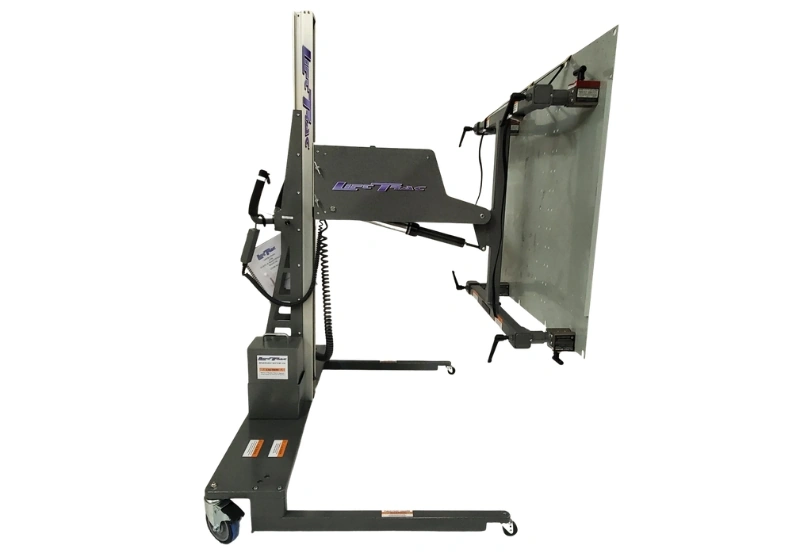
- Lift-assist fixtures that help move or position parts safely
- Material handling fixtures that protect components during transport
- Production aids that reduce setup time and improve workflow
Tooling and Fixtures as Practical Automation
Manufacturers often think of automation as robotics, sensors, conveyors, or control systems. Those tools have an important place, but practical automation can also begin with a fixture that removes unnecessary manual steps. A fixture can act as a form of practical automation when it:- Reduces operator guesswork
- Controls part orientation
- Improves repeatable placement
- Shortens setup time
- Reduces rework
- Improves safety and ergonomics
- Supports faster inspection
- Makes the process easier to train and repeat
Where Engineering Validation Adds Value
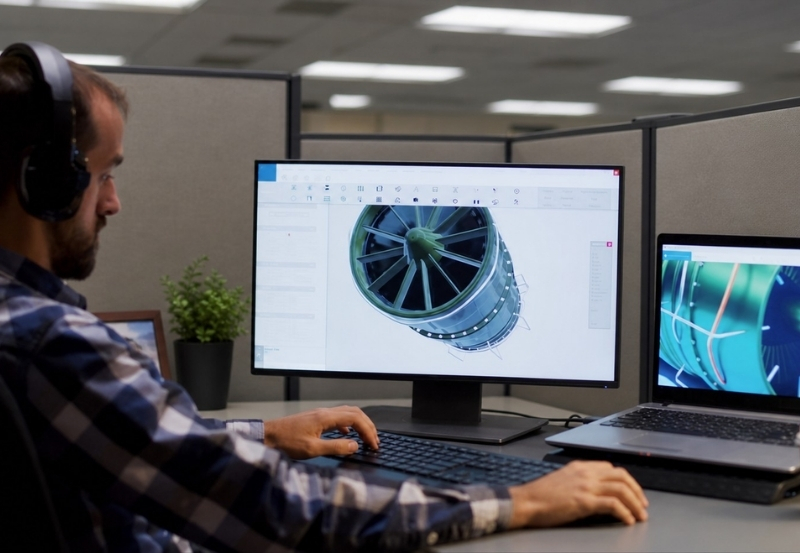
Custom tooling and fixtures need to do more than fit the part. They need to perform safely and reliably in real production conditions. Engineering validation can include load analysis, tolerance review, material selection, deflection analysis, ergonomic review, fabrication planning, and maintenance access. For fixtures that carry heavy loads or support critical operations, Finite Element Analysis can help evaluate stress, deflection, safety factors, and possible failure points before fabrication begins. This is especially important when tooling and fixtures are used around operators, high-value parts, or heavy industrial equipment. ENSER has explored this topic in Process of Finite Element Analysis for Tooling and Fixtures, which explains how simulation can support safer, smarter manufacturing decisions. Engineering analysis does not replace practical manufacturing experience, but it helps reduce uncertainty before a design is built and placed into service.Tooling, Fixtures, and Turnkey Manufacturing
One of the biggest challenges manufacturers face is the handoff between design and fabrication. A fixture may look good in CAD but still be difficult to build, adjust, maintain, or use on the production floor. That is why tooling and fixture projects benefit from engineering and manufacturing working together from the beginning. When design and fabrication are connected, manufacturers can reduce delays, avoid unnecessary redesign, and improve the final result. ENSER’s turnkey manufacturing services support this practical connection between engineering and build. For tooling and fixture projects, that means manufacturers can move from concept to design, validation, fabrication, and implementation with fewer handoffs. This is especially valuable for companies that need custom tooling, complex fixtures, one-off production aids, prototype equipment, or manufacturing support for specialized applications.Real-World Applications for Custom Fixtures
Custom tooling and fixtures can support a wide range of industries and manufacturing environments. They are commonly used in aerospace, automotive, energy, industrial equipment, electronics, medical devices, heavy machinery, and general manufacturing. ENSER’s case studies show how custom engineering solutions can improve safety, efficiency, and productivity across real-world applications. Examples include engineered fixture and lifting projects such as Precision Fixtures for the Gas Turbine Industry, 250-Ton Turn-Down Fixture for Safe Stator Rotation, and 500-Ton Lifting Dome Fixture. These types of projects show why tooling and fixtures should be viewed as more than shop-floor accessories. They are engineered systems that can influence safety, throughput, quality, and production reliability.How Better Fixtures Support Automation Readiness
As manufacturers explore automation, they need to ask practical questions before investing in advanced technology.- Can the part be located consistently?
- Can the operator or robot access the work area?
- Is the fixture rigid enough for the process?
- Will the setup support inspection and quality control?
- Can the equipment be maintained efficiently?
- Does the process reduce unnecessary lifting, reaching, or repositioning?
- Can the design be fabricated and supported over time?
How ENSER Helps Manufacturers Improve Production Processes
ENSER helps manufacturers solve practical engineering problems through custom tooling, fixture design, FEA, product development, material handling equipment, below-the-hook lifting devices, testing equipment, and turnkey manufacturing support. Rather than approaching tooling as a standalone component, ENSER looks at the production challenge behind the tool:- What needs to be held, moved, lifted, assembled, inspected, or tested?
- Where is the process losing time or consistency?
- What safety or ergonomic concerns need to be addressed?
- What loads, tolerances, or operating conditions must be considered?
- How will the solution be fabricated, installed, maintained, and used?
The Bottom Line
The future of manufacturing will continue to include AI, robotics, digital twins, and smart factory technologies. But successful automation still depends on the fundamentals: repeatability, safety, quality, and practical engineering.Custom tooling and fixtures help create that foundation.
For manufacturers looking to improve production efficiency, reduce rework, improve operator safety, or prepare for automation, engineered fixtures can be one of the most practical places to start.