
Below-the-Hook Lifting Devices: Engineering Safety and Performance
This article explores how ENSER engineers custom below-the-hook lifting devices that meet strict ASME standards. It breaks down the design considerations for load capacity, ergonomics, and operator safety, showing how FEA validation ensures structural integrity. Readers gain insight into how tailored lifting solutions improve both efficiency and compliance.
Introduction
In industrial lifting, precision and safety are non-negotiable. Spreader bars are critical components that ensure even load distribution when lifting large or irregularly shaped objects. Yet, choosing the wrong design, or using a spreader bar incorrectly, can compromise both productivity and safety. At ENSER, we’ve engineered hundreds of below-the-hook lifting systems, including custom spreader bars, for manufacturers across aerospace, energy, and heavy-equipment industries. Our experience has revealed key practices that help companies lift smarter and safer.
Understanding the Role of Spreader Bars
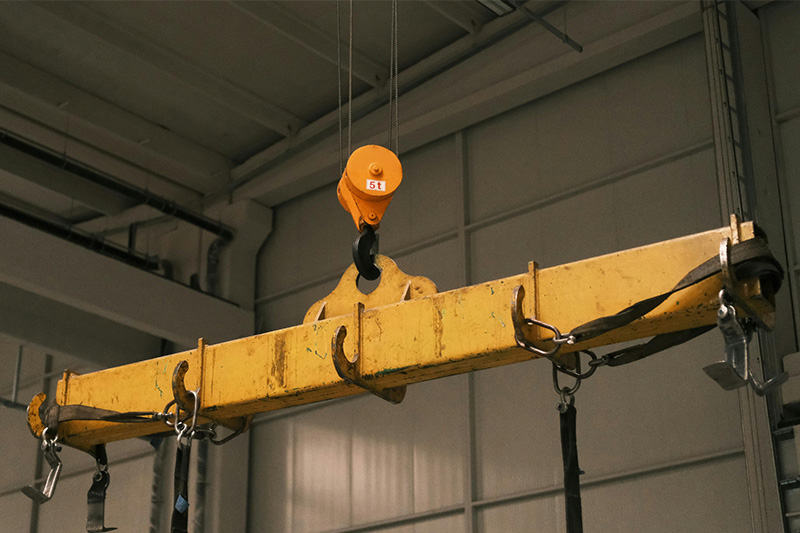
A spreader bar acts as a compression member that maintains sling angles and evenly distributes load weight across multiple pick points. Its main job is to prevent slings from crushing or distorting the lifted load. Selecting the right configuration depends on load geometry, center of gravity, lifting height, and environmental factors. Inadequate planning or incorrect spreader-bar sizing can cause lateral bending or sling failure-problems that can halt production or lead to serious injury.
Engineering-Driven Selection Process
ENSER’s approach begins with structural analysis. Our engineers perform load simulations that account for static, dynamic, and shock loads. We determine the optimal section modulus, material grade, and weld configuration for each bar. Where required, we use finite element analysis (FEA) to visualize stress concentrations and deflection under working loads. The result is a spreader bar tailored for the exact conditions in which it will operate.
Best Practices to Follow
- Evaluate Load Geometry: Understand dimensions, balance points, and rigging path before designing.
- Maintain Proper Sling Angles: Avoid sling angles under 60° to reduce compression stress.
- Apply a Safety Factor: Always design above rated capacity-ENSER typically applies 1.5× or greater for dynamic lifts.
- Incorporate Adjustability: Telescoping arms and modular components improve versatility.
- Use Certified Materials and Welding Procedures: Compliance with ASME B30.20 and OSHA 1910.179 is essential.
- Inspect Before Every Use: Bolts, pins, and welds should be visually checked for deformation or corrosion.
Real-World Insight
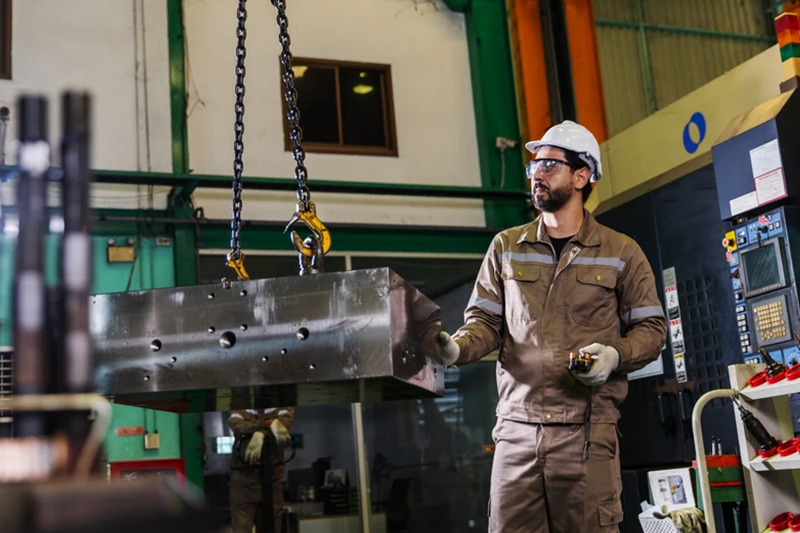
One ENSER client in the power-generation sector required a lifting device capable of safely positioning a 15-foot turbine casing weighing over 20,000 pounds. Standard spreader bars deflected under the load. ENSER designed a telescopic spreader with interchangeable end caps and optimized sling spacing. The result: zero deflection during proof testing and a 25 percent reduction in rigging time.
Benefits of ENSER Custom Spreaders
- Improved safety through engineering validation
- Adaptability for multiple lift configurations
- Documented compliance and traceability
- Long-term reliability and maintenance support
- Speed: Modular designs cut rigging time by 20–30%
- Versatility: One bar → 6+ lift configurations
- Compliance Standards like ASME B30.20 and OSHA 1910.179, among others
Conclusion
Selecting and using a spreader bar isn’t just about load rating-it’s about designing for real-world conditions. ENSER’s team combines analytical precision with hands-on lifting experience to produce custom spreaders that exceed expectations. Whether you need a simple bar or a complete lifting system, our engineers ensure every lift is strong, stable, and safe.
Frequently Asked Questions
Enhance Your Lifting Operations with Custom Spreaders
From concept to completion, ENSER helps you develop spreader bars and lifting systems built for strength, safety, and efficiency. Talk to our experts today about your project