
How ENSER Uses CAD and FEA to Optimize Designs Before Production
ENSER leverages advanced CAD modeling and simulation to streamline modern product development, replacing slow, iterative prototyping with predictive digital design. By creating detailed 3D models and digital twins, ENSER’s engineers run FEA, motion studies, and topology optimization to validate performance, reduce material use, and ensure manufacturability before production begins. A case study highlights how this approach removed 18% of a lifting frame’s weight without sacrificing strength. Through this integrated workflow, ENSER helps clients cut prototyping costs, accelerate timelines, improve reliability, and bring optimized, production-ready designs to market with confidence.
Introduction
Modern engineering demands speed, precision, and innovation. Computer-Aided Design (CAD) and simulation have become the backbone of product development-allowing engineers to design, test, and refine virtually before physical prototyping begins. ENSER uses these tools not just to model designs, but to optimize performance, reliability, and manufacturability from concept through production.
Why CAD and Simulation Matter
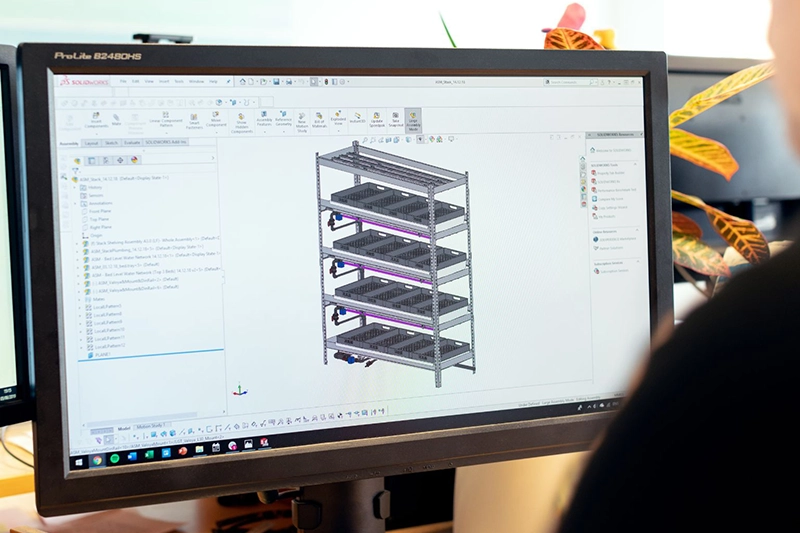
Traditional engineering once relied heavily on iterative prototyping. Today, simulation closes that gap. Using advanced CAD modeling, ENSER’s engineers create digital twins of components and systems to simulate stresses, motion, and environmental conditions. This predictive approach reduces rework, accelerates timelines, and ensures products perform as intended.
ENSER’s Digital Design Workflow
- Concept Modeling: Create detailed 3D geometry of parts, assemblies, and fixtures.
- Simulation & Validation: Run Finite Element Analysis (FEA) and Motion Studies to evaluate strength, fatigue, and rigid kinematics.
- Optimization: Refine geometry for weight reduction, manufacturability, and assembly efficiency.
- Design for Production: Generate fully detailed drawings and GD&T for fabrication.
- Lifecycle Management: Maintain revision control and traceability throughout the process.
Case Study: Structural Optimization for Lift Assembly
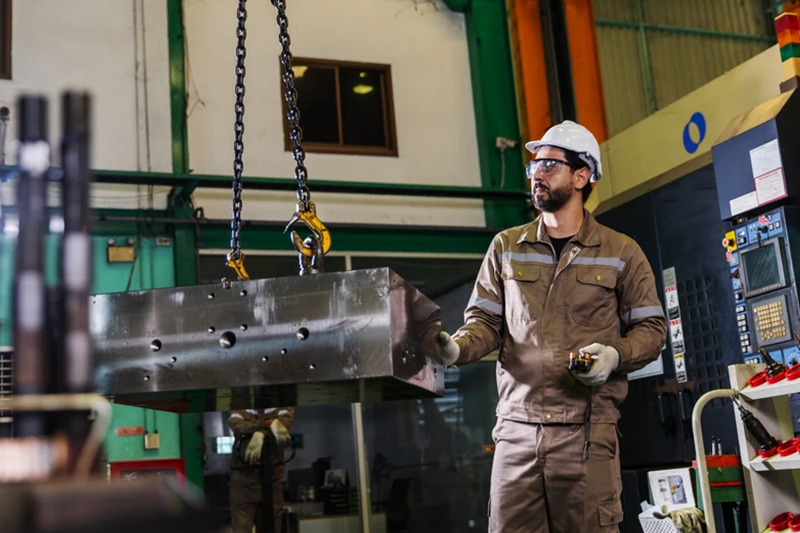
A heavy equipment manufacturer required a lightweight but rigid lifting frame. ENSER used CAD-driven topology optimization to remove 18% of the weight without reducing strength. Simulation verified load performance, leading to faster production and a significant reduction in material costs.
Benefits of ENSER’s CAD & Simulation Capabilities
- Reduced prototyping and testing costs
- Improved product accuracy and reliability
- Faster design iterations and time-to-market
- Lower material and fabrication waste
- Enhanced collaboration between design and manufacturing teams
Conclusion
Simulation isn’t the future of design-it’s the present. ENSER’s CAD and analysis-driven engineering ensures that every design is not only manufacturable but optimized for real-world success.
Frequently Asked Questions
Design with Confidence Using ENSER’s Simulation Expertise
ENSER combines CAD innovation and simulation-driven design to eliminate guesswork and accelerate your product development cycle.