Manufacturers are under constant pressure to move faster without increasing risk. New products, custom equipment, tooling, fixtures, lifting devices, and production systems all need to perform safely and reliably once they reach the floor. The problem is that design issues are often most expensive when they are discovered late.
A frame may deflect more than expected. A fixture may hold a part correctly in CAD but behave differently under load. A lifting device may need additional validation before it can be used around operators. A product may pass an initial design review but still raise concerns during fabrication, testing, or production startup.
That is why manufacturers rely on both finite element analysis and physical testing before moving into production. FEA helps engineers evaluate how a design is likely to perform before it is built. Physical testing helps confirm how that design performs under real-world conditions.
Used together, they help manufacturers reduce uncertainty, improve safety, and make better engineering decisions before problems become costly.
FEA Helps Identify Problems Before Parts Are Built
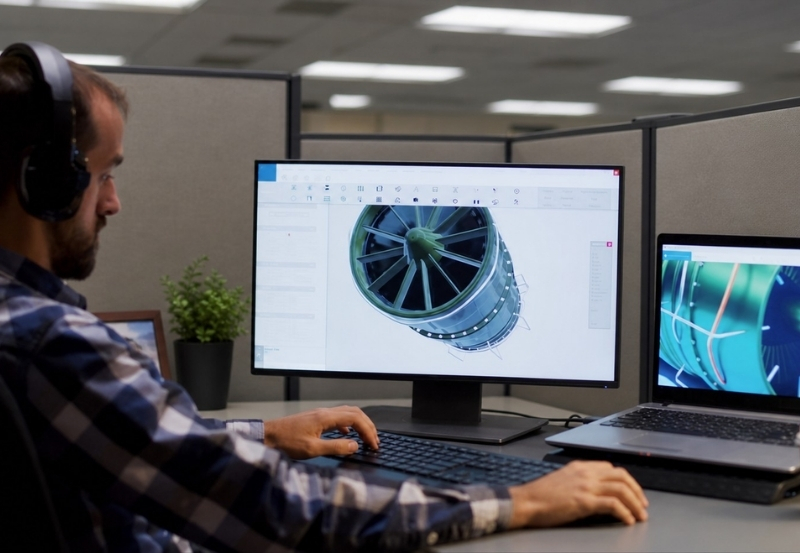
Finite Element Analysis, often called FEA, allows engineers to evaluate stress, deflection, load paths, and potential weak points in a design. Instead of waiting until a part, fixture, or structure is fabricated, engineers can use simulation to understand how it may respond to real operating conditions.
This is especially valuable for components that carry load, support production equipment, or affect safety. A manufacturer may need to know whether a weldment is strong enough, whether a fixture will remain rigid, or whether a lifting device has adequate safety factors.
FEA can help answer practical questions such as:
- Where are the highest stress areas?
- How much will the design deflect under load?
- Are there possible failure points?
- Can material be removed without reducing performance?
- Will the structure behave as expected in service?
For manufacturers working with custom equipment or production tooling, finite element analysis services can reduce the risk of building a design that later requires rework, reinforcement, or redesign.
Physical Testing Confirms Real-World Performance
FEA is powerful, but it is not a replacement for physical testing. Simulation depends on accurate assumptions, material data, boundary conditions, loading scenarios, and engineering judgment. Physical testing provides another layer of validation by showing how a product, fixture, or system behaves when it is actually built and used.
Testing can reveal issues that may not be fully captured in a model. These may include assembly variation, tolerance stack-up, operator interaction, fabrication differences, fatigue, vibration, wear, environmental effects, or unexpected loading conditions.
For example, a fixture may pass structural analysis but still need testing to confirm ease of use, repeatability, access, and alignment. A lifting device may show acceptable stress levels in simulation but still require load testing or inspection before use. A product may perform well in theory but need physical validation before production release.
This is why testing remains a critical part of engineering services for manufacturers that need confidence before production.
Why FEA and Testing Work Better Together
The strongest validation strategy is not FEA or testing alone. It is the combination of both.
FEA helps engineers make smarter decisions before physical prototypes or production equipment are built. It can reduce unnecessary design iterations, focus testing on the most important areas, and help teams understand what to measure. Physical testing then confirms whether the design performs as expected.
This combined approach helps manufacturers:
- Reduce prototype cost
- Identify problems earlier
- Improve design confidence
- Support safer equipment decisions
- Reduce late-stage rework
- Improve product and process reliability
It also helps teams avoid overbuilding. Without analysis, manufacturers may add unnecessary material or complexity simply to feel safe. With proper analysis and testing, engineers can design for the actual application rather than guessing.
Where Validation Matters Most
Engineering validation is important whenever a design must perform safely, repeatably, or under demanding conditions. That includes products, tooling, fixtures, below-the-hook lifting devices, material handling equipment, test equipment, and custom machinery.
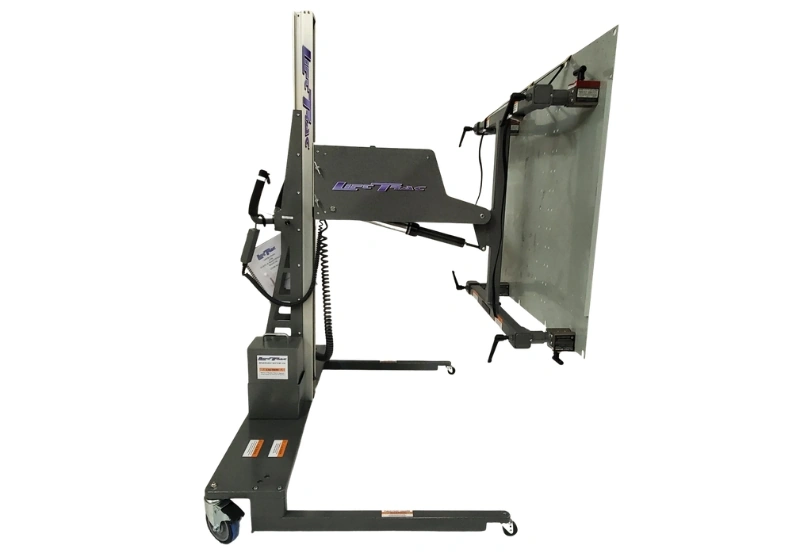
For custom tooling and fixtures, validation helps confirm that the design can support the part, maintain alignment, and withstand production loads. For lifting devices, validation helps evaluate load paths, stress, deflection, and safety factors. For product development, validation helps reduce the risk of performance issues before production begins.
ENSER’s case studies show how engineered solutions are often required when the application is too specialized or demanding for a standard approach. In these situations, engineering judgment, analysis, fabrication knowledge, and testing all work together.
Design Validation Supports Manufacturing Readiness
Manufacturers often think about validation as a final step, but it is most valuable when it begins earlier. A design that is analyzed and reviewed before fabrication is more likely to be manufacturable, serviceable, and safe to use.
This matters because a design does not succeed only on paper. It needs to be built, assembled, inspected, transported, installed, maintained, and used by people in real production environments.
That is where the connection between engineering and fabrication becomes important. ENSER’s manufacturing services help support the transition from design to build, giving customers a more complete path from concept through production support.
For related engineering topics, manufacturers can also explore the ENSER blog, which includes articles on tooling, fixtures, FEA, manufacturing support, and practical engineering problem-solving.
How ENSER Helps Reduce Risk Before Production
ENSER helps manufacturers validate designs before they become expensive production problems. Our engineering teams support product development, custom tooling and fixtures, below-the-hook lifting devices, material handling systems, test equipment, FEA, and turnkey manufacturing support.
The goal is practical: help customers understand whether a design is ready to build, test, and use. That may mean reviewing a concept, running structural analysis, designing a test fixture, improving a production aid, or helping develop equipment that performs reliably in the field.
When FEA and physical testing are used together, manufacturers gain a clearer picture of design performance and production readiness.
The Bottom Line
FEA helps manufacturers see how a design may perform before it is built. Physical testing helps confirm how it performs once real materials, fabrication, assembly, and operating conditions are involved.
Neither method should be treated as a shortcut. Together, they create a stronger validation process that helps reduce risk, improve safety, and support better manufacturing decisions.
For manufacturers preparing a new product, fixture, lifting device, or production system, the best time to find a problem is before production begins.