
The Role of Finite Element Analysis in Product Design Validation ENSER showcases how Finite Element Analysis (FEA) enhances confidence in product integrity before physical testing begins. The post breaks down real-world applications, structural optimization, fatigue prediction, and failure prevention—and illustrates how simulation data saves cost and development time. It positions FEA as a cornerstone of ENSER’s design assurance process.
Introduction
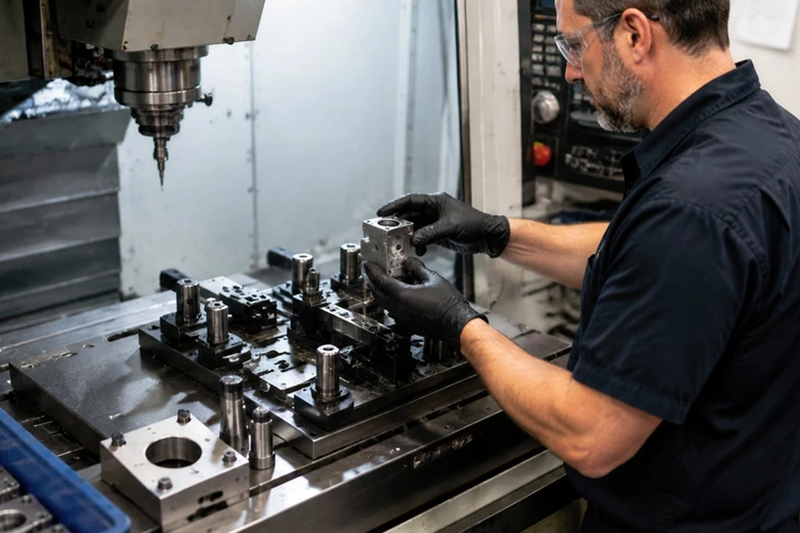
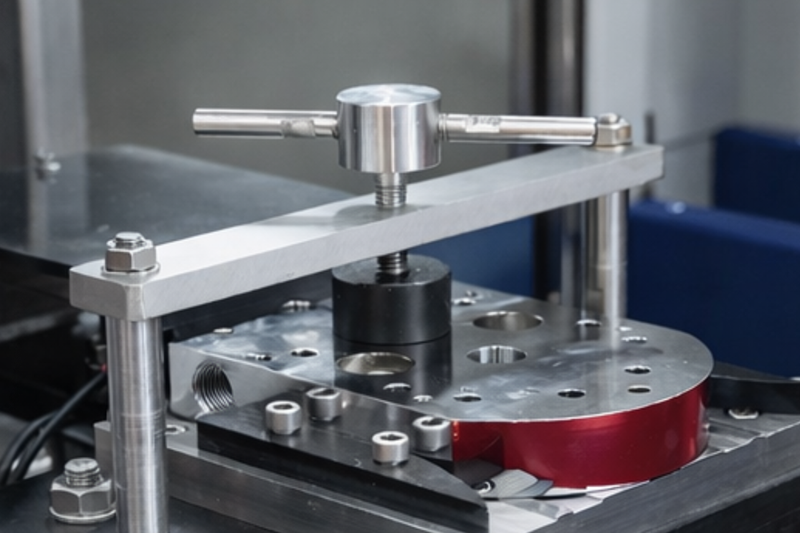
Efficiency is the lifeblood of manufacturing, and mechanical engineers are constantly seeking ways to reduce waste and optimize workflow. Jigs and fixtures are at the heart of this pursuit. These precision-engineered tools ensure accuracy, consistency, and repeatability in every operation-from machining and assembly to inspection. For decades, ENSER has partnered with manufacturers to design and fabricate advanced jigs and fixtures that improve throughput without compromising safety or quality. Our focus is on bridging theory with real-world application, ensuring that every solution is not only functional but production-ready.
Why Jigs and Fixtures Matter
Jigs and fixtures act as silent enablers of quality manufacturing. They eliminate variability by standardizing positioning and clamping, which means parts are produced correctly the first time. For engineers, they’re also tools of control-mechanisms that translate design intent into reliable, measurable outcomes. The problem many facilities face isn’t a lack of tooling, but an abundance of outdated or overly complex designs that slow down production. ENSER’s engineering team helps clients simplify processes, creating smarter jigs and fixtures that integrate seamlessly into lean manufacturing environments.
ENSER’s Engineering Approach
EENSER designs each jig and fixture with a focus on function, ergonomics, and manufacturability. Our engineers collaborate with your team to analyze the entire workflow-part handling, assembly orientation, and operator movement. We then model and validate designs in 3D, performing tolerance stack-up and interference checks to ensure perfect alignment. To reduce trial iterations, ENSER employs simulation and digital twin technology. This allows testing under virtual load conditions before fabrication begins, minimizing the time from concept to implementation.
Best Practices for Engineers
- Design for Simplicity: Avoid over-engineering-reduce moving parts where possible.
- Incorporate Ergonomics: A comfortable operator is a more efficient one.
- Standardize Components: Use common parts across fixtures for easier maintenance.
- Allow Adjustability: Accommodate minor variations in part geometry.
- Document and Label Clearly: Ensure easy setup and repeatability for all users.
Case Study: Automotive Production Line Optimization
A major automotive OEM approached ENSER to optimize a repetitive subassembly process. The existing fixtures required manual adjustments after each shift change. ENSER introduced precision locating features and self-adjusting clamps, cutting setup time by 70% and increasing production volume by 20%. Operators reported a noticeable reduction in fatigue, and product quality improved measurably.
The ENSER Advantage
ENSER’s deep domain expertise allows us to deliver results that go beyond mechanical design. We understand how tooling interacts with people, machines, and materials. Every fixture is built for longevity, ease of use, and integration into modern manufacturing systems.
Benefits of ENSER Jigs and Fixtures
- Reduced cycle time and operator error
- Consistent, repeatable quality
- Faster ROI through improved uptime
- Custom design to match specific production goals
Conclusion
For mechanical engineers, jigs and fixtures are more than hardware-they’re the backbone of precision. With ENSER as your engineering partner, you can streamline production and eliminate inefficiencies through purpose-built tooling. Our expertise ensures that every fixture enhances performance and reliability.