

Reshoring Is About More Than the Factory Location
Reshoring is often discussed as a supply-chain decision. A company moves production closer to its customers, engineering team, or domestic market.
In practice, reshoring is also an engineering challenge.
Moving production back to the United States can involve more than selecting a domestic supplier. The company may need to transfer drawings, redesign parts for available processes, develop new tooling, qualify fixtures, validate performance, and resolve issues that were previously handled by an overseas supplier.
That creates a need for engineering-to-manufacturing partners that can work across design, analysis, fabrication, testing, and production support.
Why Engineering Support Matters During Reshoring
Companies may consider reshoring because of long lead times, supply-chain disruption, quality concerns, tariffs, limited visibility, or the need to support customers more quickly. Bringing production closer to the market can help address some of those concerns, but moving the work does not automatically solve them.
A domestic production plan still needs a workable design, capable suppliers, appropriate tooling, clear inspection requirements, and a process that can be repeated. If those pieces are not addressed early, the project can become a transfer of old problems into a new location.
The Reshoring Initiative’s 2026 USA Reshoring Survey reported that U.S. manufacturers are moving more production and sourcing toward the United States, while policy uncertainty, import-price competition, and skilled-worker shortages continue to affect the pace of reshoring. The survey also identified the value manufacturers place on engineering proximity, shorter delivery times, and greater supply-chain control.
That is where engineering support becomes part of the reshoring strategy.
Domestic Production Needs Engineering Proximity
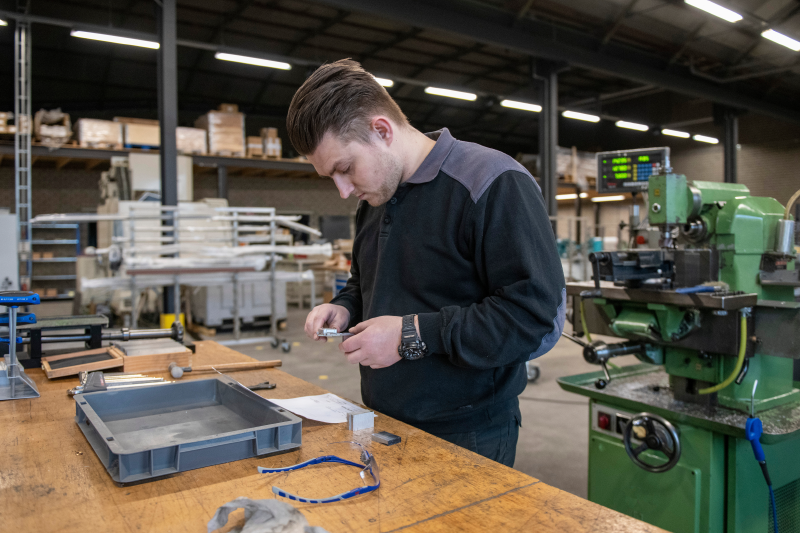
When engineering and manufacturing teams are closer, design questions can often be answered faster. A prototype can be reviewed with the people who will build it. A tooling issue can be observed on the production floor instead of explained through a long series of emails and photographs.
Proximity does not guarantee a successful launch, but it can make collaboration easier. A domestic engineering partner can help identify parts that are difficult to machine or fabricate consistently, tolerances that are more restrictive than necessary, fixtures that do not support repeatable production, and lifting devices that do not match the actual handling process.
The review may also uncover designs that depend on a supplier-specific method that is no longer available. Those dependencies are easy to miss when a product has been manufactured in the same location for years.
Design Intent Must Become Production Reality
A drawing describes what a part should be, but manufacturing requires more information. The production team needs to understand how the part will be located, clamped, machined, welded, inspected, assembled, and tested.
If the design depends on a particular fixture, sequence, or supplier capability, those dependencies need to be identified before the production transfer begins.
What an Engineering Review Should Examine
- Material availability and suitable domestic alternatives
- Fabrication and machining methods
- Tolerance requirements and inspection approach
- Weld access, distortion, and inspection
- Part handling and operator ergonomics
- Fixture and tooling requirements
- Assembly sequence and service access
- Test and validation requirements
- Opportunities to simplify or standardize components
The purpose is not to redesign everything. It is to identify the changes that make domestic production more practical, repeatable, and supportable.
Tooling and Fixtures Can Determine Whether the Transfer Works
Tooling and fixtures are often treated as a later production detail. During reshoring, they may be one of the most important parts of the project.
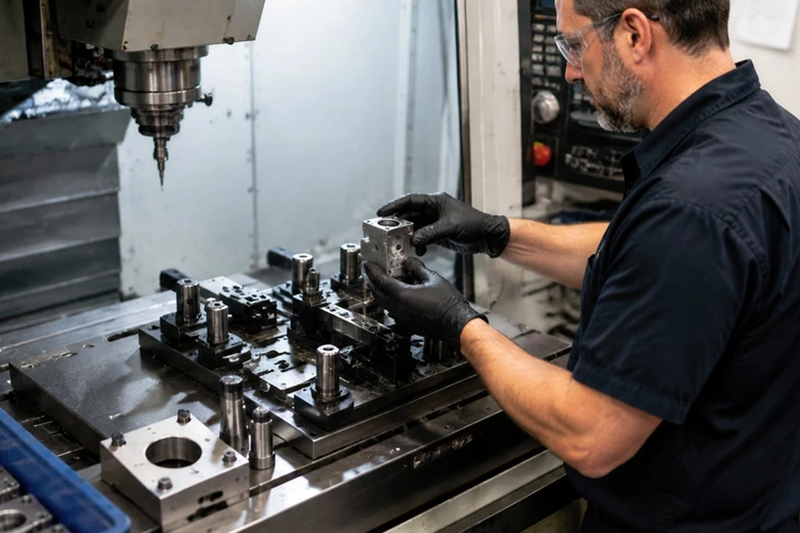
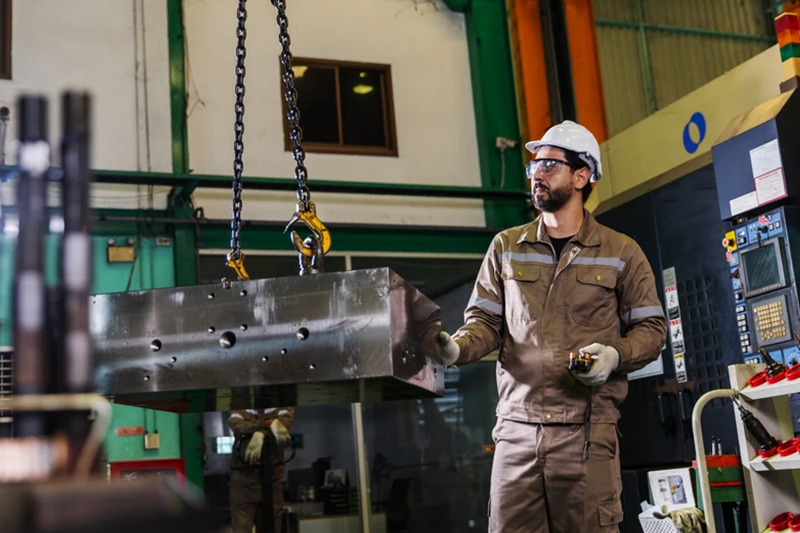
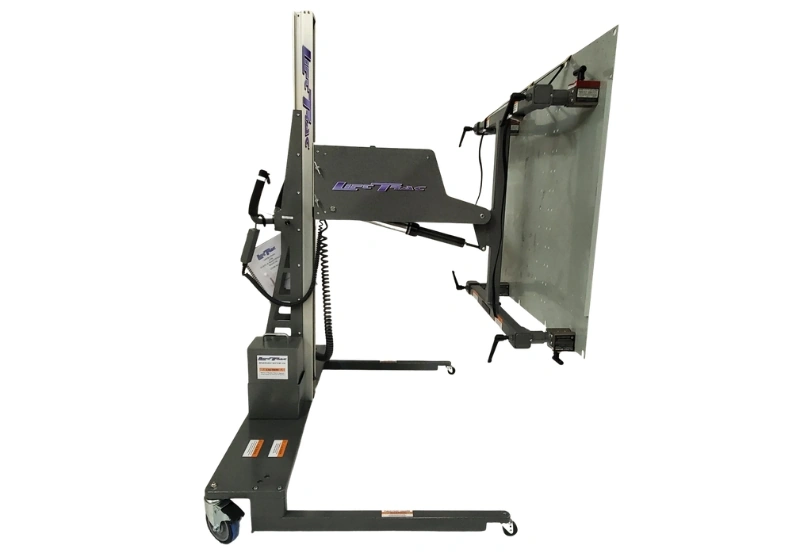
A fixture can affect part location, dimensional accuracy, operator effort, machining access, and inspection repeatability. A lifting device can affect how safely and efficiently a large or awkward component moves through the plant.
If the original tooling is unavailable, worn, difficult to modify, or tied to an overseas process, a new domestic solution may be required. ENSER’s custom tooling and fixture services support practical tools for machining, welding, assembly, inspection, testing, and material handling.
The right solution may be a straightforward fixture rather than a complex automated system. The important question is whether the tool helps the process produce consistent results with reasonable effort.
FEA Can Reduce Uncertainty During a Production Transition
Finite element analysis can support reshoring projects in several ways. It can help assess whether a redesigned component still meets structural requirements, compare material or geometry changes, evaluate a new fixture or lifting device, and identify areas where a design may be overbuilt, under-supported, or sensitive to manufacturing variation.
That analysis should be connected to the real production plan. If a component is being redesigned around a different forming or welding process, the analysis may need to consider changes in geometry, joints, thickness, or support conditions. If a lifting fixture is being built domestically, the analysis should reflect the actual load path, attachment method, and operating environment.
ENSER’s FEA services include design validation and review with manufacturing and testing teams. That helps keep the analysis connected to the product that will actually be fabricated.
Testing Confirms That the Domestic Solution Performs
A reshoring project should not end when the first part is produced. The team may need to verify dimensions, fit, load capacity, durability, vibration response, or process repeatability. The specific testing requirements depend on the product and its use.
Testing can also reveal differences between the original production method and the new domestic process. A different weld sequence, material source, fixture, or machining operation may affect the final product.
That does not necessarily mean the new process is inferior. It means the new process needs to be understood and controlled. A clear validation plan can help the team distinguish between a design problem, a manufacturing problem, and a measurement problem before the issue becomes a larger production delay.
The Best Partner Stays Involved Beyond the Design File
Reshoring projects often cross organizational boundaries. Procurement may be managing supplier changes. Engineering may be reviewing drawings. Operations may be developing the process. Quality may be establishing inspection criteria. Maintenance may be concerned with equipment and tooling support.
A partner that only delivers a CAD file may not be enough.
Companies may need help with design reviews, FEA, prototype development, tooling, fixtures, fabrication, testing, installation, and production support. The work does not always happen in a straight line. A test result may lead to a design change. A manufacturing review may lead to a fixture revision. A supplier capability may require a tolerance adjustment.
The value of an engineering-to-manufacturing partner is the ability to work through those connections.
How ENSER Supports Reshoring and Domestic Production
ENSER provides engineering, product development, FEA, tooling and fixture design, lifting and handling solutions, testing support, and turnkey manufacturing services.
That combination allows ENSER to support manufacturers at different points in a domestic production transition. The need may be a design review, a new fixture, a lifting device, an FEA study, a test system, or a broader effort to move a product from concept through fabrication and installation.
The goal is practical: help manufacturers make better engineering decisions and create production solutions that work in the real facility.
Reshoring can require engineering teams to review designs, materials, tolerances, tooling, fixtures, testing, and production methods for a domestic manufacturing environment. It is often a product and process transition, not simply a supplier change. Tooling and fixtures affect how parts are located, supported, machined, welded, assembled, inspected, and handled. If the original tooling is unavailable or tied to an overseas process, new domestic tooling may be needed for consistent production. FEA can help evaluate redesigned components, fixtures, lifting devices, support structures, and other engineered products before fabrication. It can also help compare material or geometry changes and identify areas that require physical testing. It is best to involve the partner early, before the production transfer is finalized. Early review can identify design, manufacturability, tooling, fixture, testing, and supplier-capability issues while changes are still easier to make. ENSER can support product development, engineering analysis, FEA, tooling and fixture design, lifting and handling solutions, testing support, fabrication, and turnkey manufacturing activities. The appropriate scope depends on the product and production challenge.
Frequently Asked Questions
What does reshoring mean for engineering teams?
Why are tooling and fixtures important during reshoring?
How can FEA support a reshoring project?
When should a manufacturer involve an engineering-to-manufacturing partner?
What services can ENSER provide for domestic manufacturing support?